
 English
 Tiếng Việt



















FirstEMS and the “Asia Pacific Quality Product & Service 2025” – A journey of building a management ecosystem
March 5, 2026
High-performing employees leaving: A sign that businesses need to standardize operations
March 5, 2026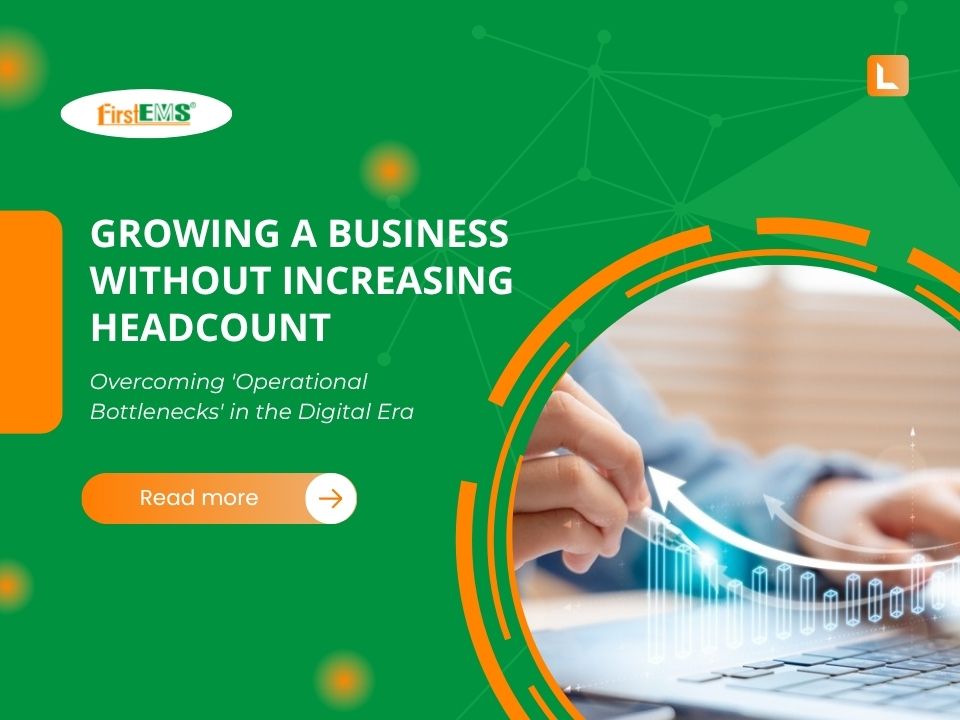
For many years, business growth was usually linked to expanding staff: adding departments, increasing operational personnel, and growing sales teams. Today, however, many companies are expanding without substantial increases in headcount, and some are even fine-tuning their workforce while scaling operations. This is no longer just a trend among a few 'tech unicorns,' but a more sustainable approach in the face of digital competition.
1. Growth is no longer solely about increasing headcount
In the digital age, technologies such as automation, data platforms, and artificial intelligence are no longer merely 'support tools' but are considered strategic essentials that help businesses overcome core operational bottlenecks.
When a business applies technology with the right mindset, it’s not just about saving time or cutting costs—it’s about boosting operational efficiency without a proportional workforce increase.
This is why companies driving digital transformation today don’t just use technology for simple tasks but embed it into how they manage their entire operations.

2. 'Slow-growth' bottlenecks commonly faced by businesses
Before exploring solutions, it’s important to identify common bottlenecks that cause many businesses to:
- Increase revenue without significantly improving profit margins.
- Avoid increasing headcount but still feel overwhelmed when expanding products or markets.
- Struggle with late reports, inaccurate data, or lack of accountability for data updates.
- Rely too heavily on individuals within internal processes, risking loss of control when staff turnover occurs.
These issues aren’t solely due to a lack of manpower but stem from an operational structure that has not been properly digitized—fragmented data, unclear roles in processes, and lacking a system to synthesize, analyze, and guide decision-making.
In essence, personnel isn’t the root solution; rather, how a business designs its operations and organizes work determines its true growth potential.
3. Growth isn’t about 'doing more' but about 'doing it better'
Many business leaders haven't yet realized this painful truth:
Growth doesn’t come from adding staff or disjointed tools but from building a consistent operational system—where people, data, and processes flow seamlessly together.
This reflects the reality in many modern businesses:
- Operational data is centralized and synchronized, reducing dependence on the number of people handling or manually consolidating data.
- Processes are digitized and automated at various stages, enabling staff to focus on creating value instead of manual tasks.
- The way work is organized, rather than expanding the infrastructure, helps businesses stay flexible as they grow.
In other words, when the operational system becomes standardized, a business can 'grow' without proportional increases in staff—because productivity, efficiency, and accuracy grow along with the process.
This is the core principle behind growing without increasing headcount: scaling performance through systems, not people.

4. How businesses are growing without increasing headcount in the digital era
A key difference between 'ordinary' businesses and those with sustainable growth isn’t just the latest technology, but:
- They see technology not as an add-on, but as the foundation for reorganizing operations.
- They don’t hire more people to handle manual tasks; instead, they invest in the mindset and operational structure that enables work to flow and improve itself.
- They shift from chasing tools to refining their business management system.
This means that if a business only considers AI, software, or tools as solutions, it might be disappointed. Success occurs when mindset, strategy, and operations are integrated at a system level, not just through individual tools.
Growth doesn’t result from adding people, branches, or tools but from how a business structures its operations to achieve maximum efficiency with current resources. That’s why many companies can expand sustainably without increasing their headcount.